A Sample of the Work

Inside the Work

A Curated Excerpt · Three Ancestors · One Sigil · One Pattern

What a Lineage Session produces is a precision document — written across registers, frequency-tagged to specific Fields of the Navigation Map. Below is a small, real excerpt from the practice. Three ancestors at full layer depth, one rendered sigil, and three sections of a Convergence following a single frequency-tag pattern from witness through synthesis.

Section One

Three Ancestors

Each ancestor is rendered across five layers — Terroir (the ground they stood on), Unresolved (what they carried that couldn't yet be spoken), Thread (what they refined and passed forward), Lineage (where they sit in the longer arc), Sigil (the image that holds it). The excerpt below shows the first four; the sigil is its own section.

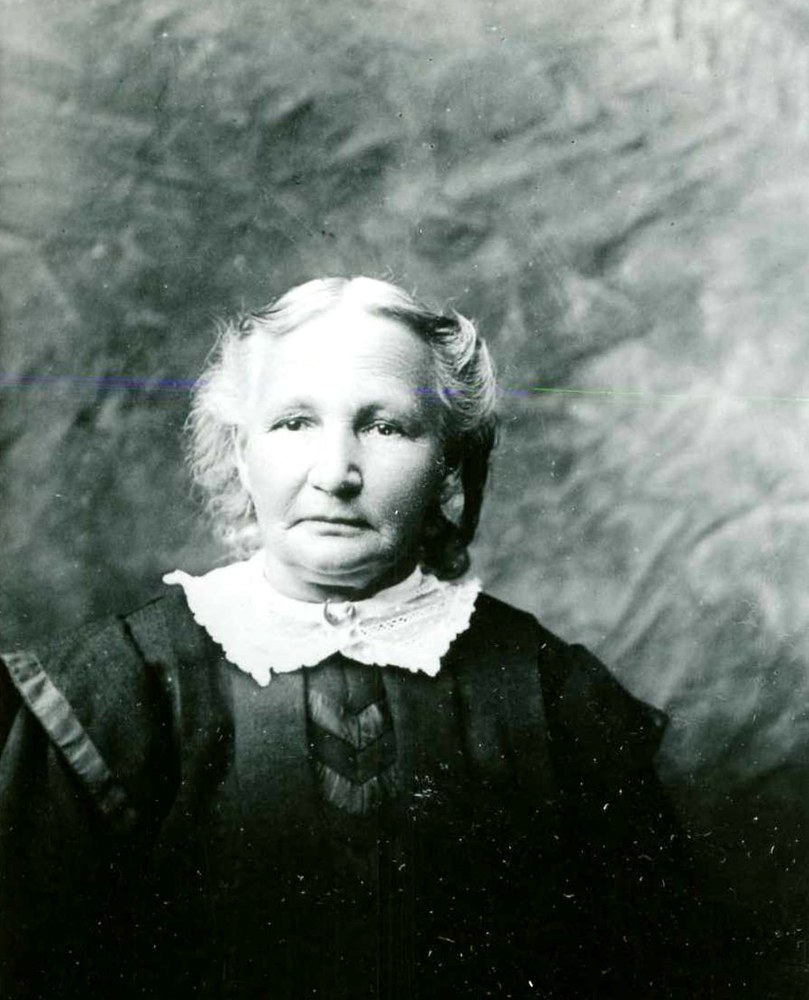
Christina Young Higginson — 1844–1910
Christina Young Higginson
The Crossing · Poet on the Ship · She Who Arrived with Three Pence
1844 – 1910  ·  Scotland · Utah · Idaho
Terroir
White Hill, parish of Dalkeith, Midlothian — coal country south of Edinburgh, grey stone, the cold light of lowland Scotland, the River Esk threading through a landscape of industrial tenements and ancient parishes. She was born July 31, 1844 into a family that had already given everything to a faith and a destination: her father left for America when she was three and drowned at sea before reaching New Orleans. Her mother died in 1855. Both grandmothers followed. By fourteen she was in Edinburgh alone, looking for work, writing verse to process what could not otherwise be held. Then Liverpool — the world's largest port, smelling of tar and salt and departure. The docks where she sat with three pence and a borrowed Danish phrase. The Atlantic. Nebraska. The Platte River road across the plains. The Salt Lake Valley opening between the mountains in September 1863. Goshen in the Utah desert. Hatch, Idaho, with its spring of watercress and its log house and its homestead in the hills. She inhabited every kind of terrain the American continent offered and made a home in each.
The Unresolved
She lost her father to the sea before she could know him. She lost her mother at ten. She lost the young Englishman she loved because he was not of her faith. She lost her job because she had been baptized. She stowed away on a ship with three pence, not a relative or friend on board, knowing she could be returned or worse. Her husband was arrested; their sixteen-year-old daughter died while he was not permitted to come home for the funeral. Her son Jim fell and was blinded. She spent her final years nursing her husband's difficult brother, who promised her one thousand dollars — money she died before receiving. She was sixty-six when she died on July 6, 1910. The unresolved is not bitterness — her poem to Hattie radiates a love that transcends every category assigned to their arrangement. The unresolved is the question of what a woman of this quality, this intelligence, this generosity — what she might have made if the world had given her the full span of resource that men of comparable gifts received. Four hundred births. Twenty-five years of leadership. A born poetess. Three pence.
The Living Thread
She was born at White Hill — the same name as the hill in London where Bran Fendigaid commanded his severed head to be buried, to guard Britain from invasion. The mythic beginning of this weaving and its most recent documented ancestor share a name. The weaving completes a circuit across two thousand years. She wrote her ship poem to Ann Paxman — and the name Paxman lives in the lineage that becomes Paxton, the name carried in this work today. She resonates with Magdalene — the one who goes to the threshold alone and is not believed. With Boudicca — the woman who acts when no conventional path is available. With Eleanor of Aquitaine — the creator who builds culture inside constraint, who governs through what she makes. Her relationship with Hattie Taylor Higginson — thirty-seven years of compound loyalty, their standing together against William, their pledge that the survivor would lay the other to rest — is the most complete image of feminine alliance in this entire weaving: two women who chose each other across the structure that was supposed to divide them.
The Lineage
Body as active practice · Resonance in language · Threshold events · Anomalous reception · Creative record. Christina Young is the ancestor in whom all five clusters of the navigation map are simultaneously alive. Her body was her instrument of service — four hundred births, twenty-seven years of midwifery, endless nursing. Her language was her sovereign expression — verse from childhood through death. Her life was one long threshold crossing — always moving toward the place her parents had named before they could reach it themselves. Her faith was the most radical form of anomalous reception: she acted on what she could not yet see, with three pence and a Danish phrase, and the territory unfolded before her. She completed what her parents could not. She is the Sovereign Descent made body.
Caroline Hopkins Clark
She Who Crossed for Love · Journal Keeper on the Atlantic · The Birthday Sunset
1831 – 1900  ·  Sutton Coldfield · Liverpool · Coalville, Utah
Terroir
Sutton Coldfield, Warwickshire — a market town in the West Midlands, her family comfortable, with education. Birmingham came after: the industrial city, the shoe shop where a young woman could invent a reason to keep returning. Then Liverpool, the smell of the Atlantic beginning. The John Bright — thirty-six days, swells rolling mountain high, the children sick below decks, John at the cooking, Caroline keeping the record. The train across America in heat that blistered the children's faces. Coalville in September — log houses, cold air, Frank dying at his uncle's house while Ada was being born. Upton at last: scrub and rock, her first cabin through a hard winter. She made every landscape her body's home without losing the one before it.
The Unresolved
John in 1855. Herbert Henry in 1861. Samuel in January 1865 — Frank's twin, dead before he reached two. Martha Eliza near Chicago, June 14, 1866 — John stayed behind to bury her alone while the company moved on. Caroline wrote: She died with the same complaint as my three other children. She was counting. Frank died in September at Coalville. The crossing never stopped to hold the grief. What could not be metabolized moved forward instead — into the tissue, into the generations, into the bodies of descendants who carry the accumulated weight without knowing its source. The infant death pattern is the deepest unresolved in this lineage: four children, the same complaint, no ceremony adequate to what was left behind in ground the family would never find again.
The Living Thread
On May 15, 1866 — her thirty-fifth birthday, mid-Atlantic — she watched the sunset from the deck of the John Bright and wrote: It is the grandest sight we have ever witnessed. It is impossible to describe, but if you would like to see it, you will have to do as we have done. This is the transmission: you cannot be told what I have seen. You will have to cross. She kept the journal because she said she would, and the person she said it to was her family in England — the ones who had rejected her for her conversion. She bore witness to the truth of the crossing for those who cast her out. She resonates with Magdalene — the one who carries the accurate report to those who will not receive it, who keeps the record anyway. With Christina Young Higginson — the same Liverpool departure three years earlier, the same faith, the same destination, language as the thing carried when you cannot carry much else.
The Lineage
The Creative Record · Threshold Events · Anomalous Reception · Body as Active Practice. The journal was published, distributed at family reunions, archived at the Church History Library (Ms 8306 1 #10). Her children remembered her reading aloud by coal oil lamp with her hands always busy, finishing a sock in an evening's sitting — the creative record as daily practice, transmission as continuous act. She received the gift of tongues in public worship in 1887, John giving the interpretation: direct anomalous reception in the documented record. She was the community's first teacher, storekeeper, postmistress, Relief Society President. The body as instrument across every register — the school, the store, the needles always moving, the voice always reading.
Alfred Douglas Young
The Visionary · Elder of Israel · He Who Saw and Could Not Deny
1808 – 1889  ·  Tennessee · Illinois · Nauvoo · Utah
Terroir
He was born in Springfield, Robertson County, Tennessee on the 13th of April 1808. His father Jacob Young left before he was born and he was about one year old when his mother Mary Boren took him to Illinois with her father. He grew up without his father, raised by his mother and eventually his stepfather Willis Boren, moving from Illinois to Kentucky to Tennessee in his first twelve years. He was baptized into the Church of Jesus Christ of Latter-day Saints in 1841 in Gibson County, Tennessee, after hearing the gospel for the first time at his stepfather's house from Elders McIntosh and Timmons. He wrote his autobiography in 1888 at the instruction of Apostle George A. Smith, who had counseled him thirty years earlier to put the vision on record. The autobiography is a primary document — his own account, written in the nineteenth year of his age and completed in the 80th — of a life organized around the experiences he could not deny and could not explain except in the language his tradition gave him. He raised a large family, settled in Utah, and died in 1889.
The Unresolved
On the morning of September 17th, 1841, sitting on the trunk of a tree in front of his brother William's house in Gibson County, Tennessee, Alfred Douglas Young had what he describes as a complete separation of his spirit from his body. His brother William watched over him for three or four hours. Alfred's account in his autobiography describes being conducted by an angel through the celestial, terrestrial, and telestial kingdoms; seeing Joseph Smith ordained by Peter, James, and John; watching armies contend and the Saints prevail; and beholding a new earth with a temple whose foundations were of different and beautiful materials. He returned to his body, stood up, and immediately told his brother everything he had seen. Alfred brought this account to Nauvoo in 1842 and was nearly disfellowshipped from the Church for it — the High Council did not believe two ordinary elders could have such great power from God. Brigham Young took him aside and said: Let your heart be comforted and go your way and it will all be right. We want such men as you in the Church. Men of faith in the gospel. The unresolved is the question his life holds in tension: the man whose experiences exceeded what his institution could initially receive, who was told to deny what he had seen, and who stood up in the High Council and said he could not do it — to deny these things would be to deny Christ.
The Living Thread
Alfred Douglas Young is the clearest example in this weaving of Field II — Anomalous Reception — in its fullest, most documented form. He left a thirteen-page autobiography in his own hand describing experiences that operated entirely outside the ordinary register: the out-of-body vision, the healing of a man whose leg had no circulation for years, the raising of a man who had died, a pistol that could not fire in his presence. He wrote the autobiography for his posterity and for the world as a testimony to the goodness, power, and majesty of God. That document arrived in this weaving through his granddaughter Rebecca Billings, through Christine Higginson, through you. He connects to Mary Boren — his mother, who died at Winter Quarters and never crossed — as the son who made the crossing she prepared him for, who carried the Bryan-Boren frontier frequency and the Latter-day Saint community frequency forward together. He connects to the living descendant through the specific inheritance named in his autobiography: he wrote it as a testimony to posterity. It is now in your hands. The testimony arrived.
The Lineage
Anomalous reception · The Teaching · Threshold events. Alfred belongs to anomalous reception through the documented specificity of what he describes in his autobiography — not the general claim of spiritual experience but the particular account: the sensation like warm water poured over his head, the light bursting through the tops of the trees, the body left on the ground while his brother watched, the return through the angel's instruction. He belongs to the teaching through what he did with what he had received: he went out and preached it, baptized dozens, healed the sick, and when the institution required him to recant, he refused. The teaching is what he carried and transmitted rather than what he was formally authorized to transmit. And he belongs to threshold events through the full arc of his American life: Gibson County to Nauvoo to Salt Lake Valley, each crossing a documented threshold, the autobiography written at the far end of the journey as a record of what the crossings had shown him.
Section Two

A Sigil

The sigil is the fifth layer. It compresses what the prose has named into a single image — something the body can recognize without language. Below is one example; every ancestor in the Weaving carries one.

The John G. Boyd · Three Pence · The Navigator's Star
Christina's primary sigil is the ship she stowed away on — the John G. Boyd, 1863, out of Liverpool with 763 Scandinavian converts and one young Scottish woman with no money, no papers, and a single borrowed phrase in Danish. The ship is the threshold object of this lineage: the vessel that crosses what cannot be crossed on foot, that commits the body to a journey with no guarantee of arrival. The three coins are the three pence she carried — her entire material resource, two of which she spent on a stamp to write goodbye to her brother. The navigator's star is what she followed instead of money: faith as navigation, the capacity to act on what has not yet become visible.
— from the Weaving for Christina Young Higginson
Section Three

A Frequency Pattern

A full Convergence is a 12-section analysis read across all the frequency tags carried by a Weaving. Below is one frequency followed end-to-end across three of those sections — what the pattern looks like, where it sits in the lineage, what it asks the living descendant to do.

The Pattern · Named
The Wound That Will Not Close

The wound that will not close is not a failure to heal — it is a signal the body refuses to silence. Bran Fendigaid carries the original template: the king whose wound transforms him into an oracle, whose severed head continues to speak, whose sacrifice under the White Hill holds the island itself against ruin. The wound is the function. Boudicca carries the next articulation — what was done to her body was not punishment but public architecture, a wound designed to teach every witness that sovereignty could be stripped from flesh by force. She answered by burning three cities, and then she was erased from the record for a thousand years. The wound persisted in the land itself. Benoni Patten and Edith Cole carry this frequency into the colonial period in the most ordinary and devastating form: they buried children named Benoni, one after another, giving the dead child's name to the next living one, as though repetition could close what would not close.

Where It Sits · The Lineage Arc
Across Time

What remains unresolved is the relationship between the wound and the voice. Bran possessed the Cauldron of Rebirth — the dead placed within it rose whole but silent, unable to speak. The restoration cost them their testimony. Arthur imagined a structure with no head — a table of equals — and it collapsed from within through the very bonds it generated, the wound reopening precisely where love was strongest. Æthelflæd chose, after one birth, to close her body to further children, converting the wound of dynastic expectation into sovereign refusal. Across this lineage, the pattern repeats: the wound produces either silence or architecture, but rarely both. The testimony gets swallowed. The structure gets built. And the question that would connect them — the Grail question, the one the knight must ask the wounded king — goes unasked, generation after generation, because no one recognizes that the wound is waiting to be witnessed, not repaired.

What It Asks · The Living Thread
What's Available Now

You carry this frequency in your body, and your tapestry confirms it — Sedna's severed hands, Inanna on the hook, every figure you have claimed knows this wound from the inside. What the lineage could not do is hold the wound open and speaking at the same time. The ancestors built kingdoms over it, named children into it, burned cities because of it, but the wound and the voice never merged into a single instrument. That is what calls forward now. Not healing in the sense of closure — this wound does not close because it is not supposed to close. It is a mouth. What it makes possible is a practice of testimony that does not require the body to be whole first, that lets the wound itself become the organ of perception. The Grail question is not "what ails thee" but "whom does this serve." You are the one who asks it.

A Convergence is twelve sections like this

The lineage snapshot, the inherited assignment, the chart read against the Map, every dominant frequency walked through, where the streams meet, the unresolved thread, the living thread, what the naming asks of you — plus a two-page summary PDF. The Lineage Session is the entry point — ninety minutes plus a twelve-ancestor starter Weaving plus the first Convergence.

The Lineage Session — $444